


How to spot genuine Hermès bags: 85% accurate guide 2026
BVPRIVE Editorial Team on 5th Mar 2026
How to spot genuine Hermès bags: 85% accurate guide 2026
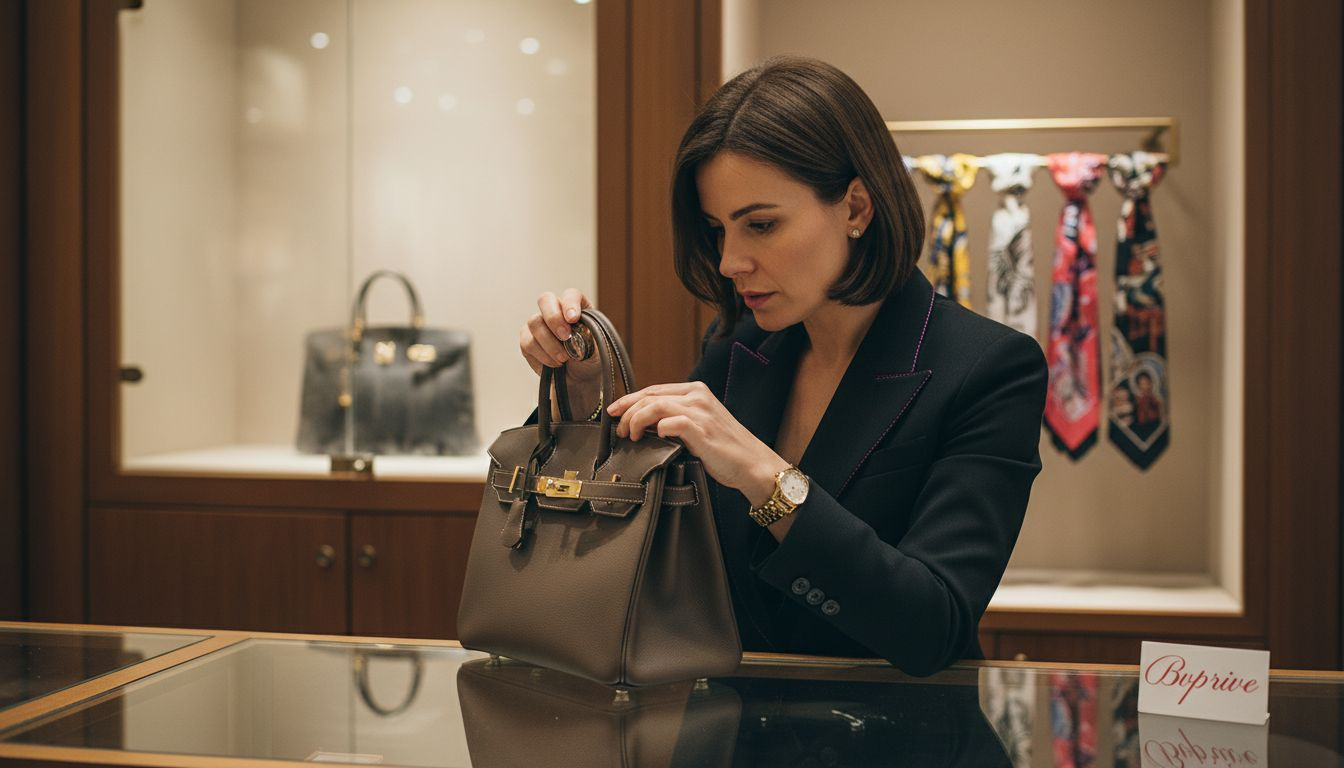
Every luxury collector fears the moment they discover their prized Hermès bag is counterfeit. Sophisticated fakes flood the market, making authentication crucial before any purchase. This guide walks you through practical steps to identify genuine Hermès bags with approximately 85% accuracy using systematic inspection techniques you can apply immediately.
Table of Contents
- What You Need Before Authenticating A Hermès Bag
- Step 1: Examine The Hermès Stitching And Craftsmanship
- Step 2: Analyze Hermès Leather Types And Texture
- Step 3: Inspect Hardware Quality And Engravings
- Step 4: Verify The Date Code And Blind Stamp
- Step 5: Confirm Provenance And Documentation
- Common Mistakes And Red Flags To Avoid
- Expected Outcomes And Accuracy Benchmarks
- Discover Authentic Luxury Handbags With BVPRIVE
- Frequently Asked Questions
Key takeaways
| Point | Details |
|---|---|
| Essential preparation | Gather magnifying tools, UV light, and updated 2026 date code references before starting authentication. |
| Physical inspection focus | Examine saddle stitching precision, leather texture characteristics, and hardware quality for authenticity clues. |
| Documentation verification | Original receipts, warranty cards, and provenance records confirm authenticity and increase resale value by 20-30%. |
| Common counterfeit errors | Watch for inconsistent stitch spacing, incorrect blind stamps, and misspelled hardware engravings. |
| Achievable accuracy | Following this structured method yields 85% DIY accuracy versus 99.5% from professional services. |
What you need before authenticating a Hermès bag
Successful authentication starts with proper preparation. You cannot identify subtle counterfeit markers without the right tools and reference materials at hand.
Start by assembling these essentials. A magnifying glass or jeweler’s loupe reveals microscopic stitching details and engraving quality that naked eyes miss. UV light exposes hidden markings and leather treatment inconsistencies common in fakes. Obtain current reference guides showing Hermès date codes and blind stamps updated for 2026, as these coding systems evolve yearly.
Familiarize yourself with Hermès leather varieties before inspection. Togo leather displays a soft, pebbled texture with natural give. Clemence features heavier weight and larger grain patterns. Epsom offers semi-stiff structure with fine, pressed grain. Understanding these fundamental characteristics helps distinguish genuine materials from synthetic imitations.
Gather any available provenance documents from the seller. Original sales receipts, warranty cards, dust bags, and care booklets provide crucial verification beyond physical inspection. These items authenticate ownership history and production details. Professional collectors know documentation dramatically strengthens authentication confidence when combined with visual inspection.
- Magnifying glass or jeweler’s loupe (10x magnification minimum)
- UV flashlight for material analysis
- Current 2026 Hermès date code reference chart
- Sample images of authentic leather types
- Notebook for recording inspection findings
Step 1: examine the Hermès stitching and craftsmanship
Stitching quality separates authentic Hermès bags from even sophisticated counterfeits. Hermès artisans use saddle stitching, a centuries-old technique requiring two needles and exceptional skill.
Inspect the stitch pattern closely with your magnifying tool. Authentic Hermès bags feature uniform saddle stitching with precise 2.5 mm spacing and straight, symmetrical lines throughout every seam. Each stitch hole should appear perfectly aligned without overlapping thread or irregular punctures. The thread itself maintains consistent tension, creating a raised ridge along seams that feels smooth under your fingertip.
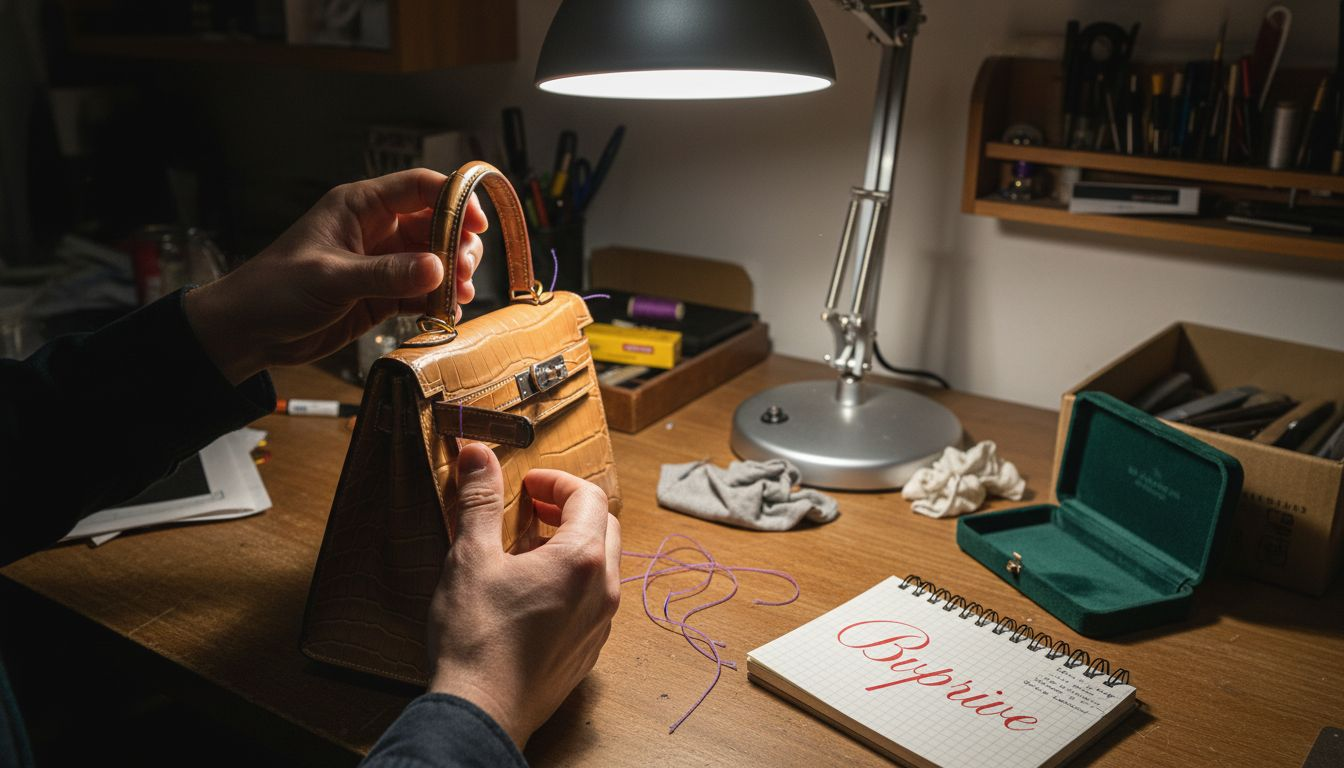
Examine stitching color and material. Hermès uses waxed linen thread matching or complementing the leather tone. The wax coating provides subtle sheen and weather resistance. Thread ends never fray or show loose fibers on genuine pieces.
Counterfeit bags reveal themselves through stitching flaws. Watch for varying stitch lengths within the same seam, uneven spacing that deviates from the standard 2.5 mm pattern, or machine-made stitches lacking the slight irregularity inherent to handwork. Loose threads, skipped stitches, or crossed thread paths indicate manufacturing shortcuts incompatible with Hermès standards.
- Check stitch spacing consistency (approximately 2.5 mm apart)
- Verify straight, symmetrical stitch lines across all seams
- Confirm uniform needle hole size and alignment
- Look for waxed linen thread with appropriate sheen
- Identify any loose threads, overlaps, or irregular patterns
Pro Tip: Photograph stitching under magnification and compare directly with verified authentic examples from trusted authentication resources to spot subtle differences your eye might initially miss.
Step 2: analyze Hermès leather types and texture
Leather tells the truth about a bag’s origin. Hermès sources exceptional hides and treats them with proprietary methods that create distinctive textures impossible for counterfeiters to replicate perfectly.
Identify the leather type first. Genuine Hermès leather types such as Togo, Clemence, and Epsom have distinct grain patterns and elasticity unique from counterfeits. Togo feels soft and supple with visible pebbling that compresses slightly under pressure. Clemence displays larger, flatter grain with substantial weight and relaxed drape. Epsom presents firmer structure with fine, embossed grain holding its shape rigidly.
Test leather responsiveness by gently pressing the surface. Authentic Hermès leather springs back to its original form without retaining fingerprints or pressure marks. The material breathes naturally, never feeling plastic-like or artificially smooth. Temperature matters too; genuine leather warms quickly to your touch while synthetic materials stay cool.
Examine grain consistency across the entire bag. Natural leather shows slight variations in texture and color depth, reflecting the hide’s organic origin. Perfect uniformity suggests artificial treatment or synthetic construction. Small imperfections like tiny scars or subtle color variations actually support authenticity when consistent with the declared leather type.
- Feel for appropriate softness and elasticity per leather type
- Check grain pattern consistency with verified samples
- Test surface responsiveness to touch and pressure
- Identify any plastic-like texture or artificial smoothness
- Accept natural imperfections consistent with genuine hides
Pro Tip: Visit authorized Hermès boutiques to handle authentic bags and train your tactile memory on genuine leather characteristics before evaluating purchases.
Step 3: inspect hardware quality and engravings
Hardware reveals manufacturing standards through weight, finish quality, and engraving precision. Hermès uses solid metal components that counterfeiters struggle to replicate accurately.
Assess hardware weight and material. Genuine Hermès hardware uses substantial Palladium or Gold plated metal with noticeable heft. Lift the bag and feel how hardware components contribute to overall weight. Lightweight, hollow-feeling hardware suggests inferior materials typical of counterfeits.
Examine engravings under magnification. Hermès stamps appear crisp and deeply etched with perfect letter spacing and alignment. Font consistency matches across all hardware pieces. Any misspellings, blurred edges, or shallow impressions indicate counterfeit manufacturing. Check zipper pulls, lock plates, and buckles for consistent engraving quality.
Inspect screw types carefully. Hermès exclusively uses flathead recessed screws on hardware assembly. Phillips head screws or other screw types signal non-authentic production. Screws should sit flush with hardware surfaces without protruding edges or stripped slots.
Evaluate finish quality across all metal components. Authentic plating shows uniform color and sheen without bubbling, peeling, or discoloration. Edges feel smooth and properly finished, never sharp or roughly cut. Hardware style and color must match the bag’s production era and model specifications.
- Confirm solid metal construction with substantial weight
- Verify flathead recessed screws (never Phillips head)
- Check engraving sharpness and correct spelling
- Inspect plating uniformity without defects
- Match hardware style to bag model and era
Step 4: verify the date code and blind stamp
Blind stamps connect physical bags to official Hermès production records. These coded markings identify manufacturing year and artisan, providing verification beyond visual inspection.
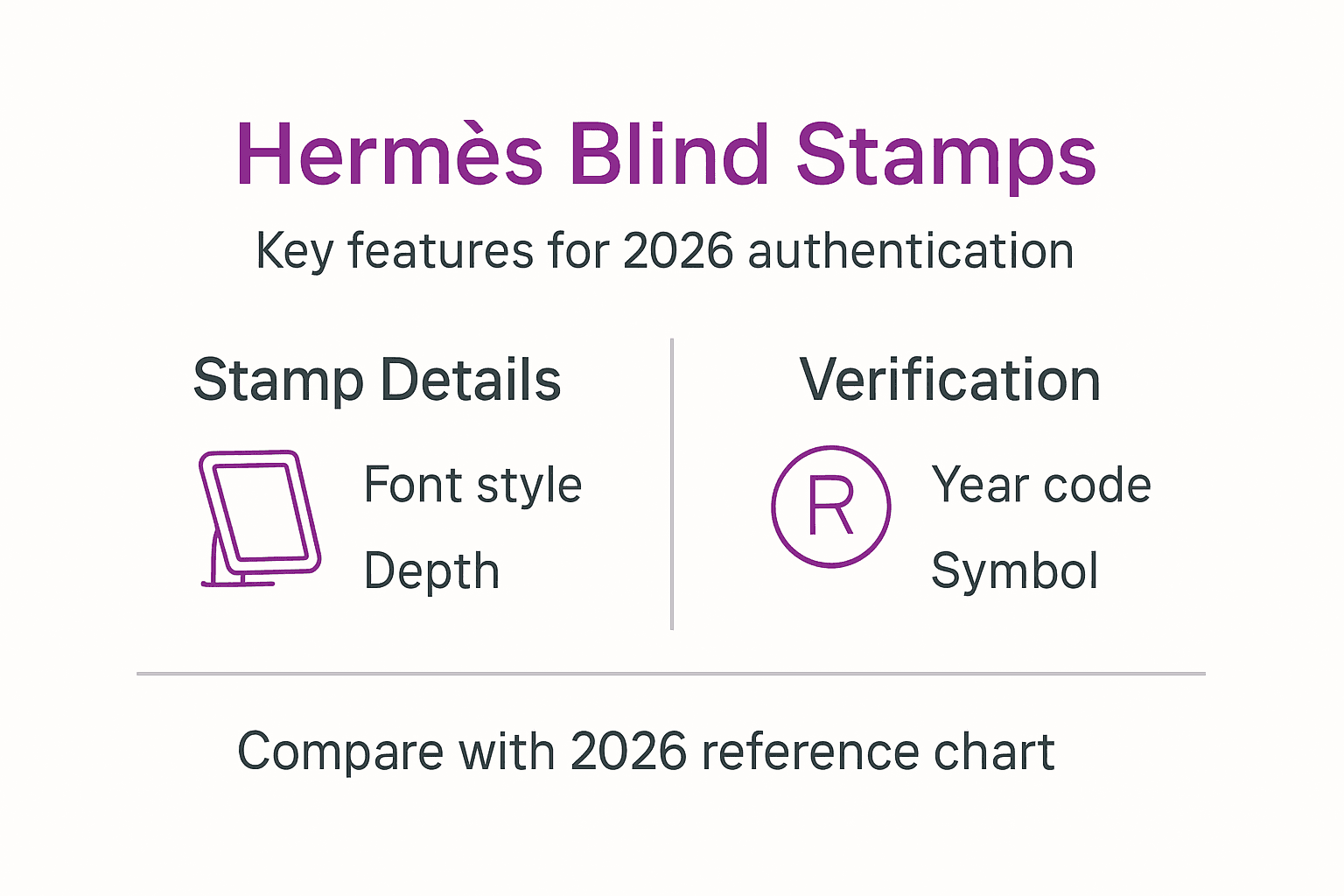
Locate the blind stamp carefully. Hermès places stamps on interior leather surfaces, typically near seams or under flaps. The impression appears as a small symbol or letter combination pressed into the leather without ink or color. Use your magnifying tool and angled lighting to read faint stamps clearly.
Decode the marking system using current 2026 references. Hermès changes yearly symbols, with each letter or shape corresponding to specific production years. The stamp also includes an artisan mark identifying the craftsperson who assembled the bag. Cross-reference both elements against official Hermès date code guides to confirm accuracy.
| Symbol Type | Information Provided | Verification Method |
|---|---|---|
| Year symbol | Production year | Match to official 2026 guide |
| Artisan mark | Craftsperson identity | Verify mark exists in records |
| Stamp depth | Manufacturing quality | Check clear, even impression |
| Placement | Brand standards | Confirm typical location |
Match stamp details to provenance documentation. The blind stamp year should align with purchase history and any accompanying paperwork. Significant discrepancies between stamped dates and seller claims raise authenticity questions.
Counterfeit stamps reveal themselves through execution flaws. Watch for inconsistent fonts that vary from authentic examples, incorrect symbol placement deviating from standard locations, or blurred impressions lacking the sharp definition of genuine stamps. Some fakes omit stamps entirely or use incorrect symbols for the claimed production year.
Step 5: confirm provenance and documentation
Physical verification gains strength when combined with documented ownership history. Original paperwork proves legitimate retail purchase and careful ownership.
Request complete documentation from sellers. Authentic Hermès bags include sales receipts showing boutique location and purchase date, warranty cards with matching serial information, and branded care booklets explaining maintenance procedures. Original dust bags, boxes, and ribbon wrapping further support authenticity claims.
Inspect paperwork quality carefully. Hermès documentation uses premium paper stock with crisp printing and accurate brand styling. Colors, fonts, and layouts match the production era. Photocopied receipts, generic warranty cards, or poorly printed materials suggest questionable origins.
Verify information consistency across documents. Receipt dates should align with blind stamp years. Serial numbers must match between warranty cards and bag stamps. Boutique locations should correspond to actual Hermès retail presence during the stated purchase period.
Understand how verified provenance increases investment value substantially. Bags with complete documentation command premium prices and sell faster than pieces lacking paperwork. Strong provenance also enables confident future resale.
- Original sales receipt from authorized retailer
- Warranty card with matching serial numbers
- Branded care booklet and dust bag
- Original packaging if available
- Consistent information across all documents
Common mistakes and red flags to avoid
Even experienced collectors make authentication errors that lead to costly purchases. Understanding frequent pitfalls protects your investment.
Avoiding these common mistakes improves your accuracy significantly. Many buyers focus exclusively on obvious features while missing subtle indicators that reveal counterfeits. Counterfeit Hermès bags often show stitch spacing outside the 1.5-3.5 mm range, incorrect date stamps, and misspelled hardware engravings that collectors commonly miss during rushed inspections.
| Common Mistake | Consequence | Corrective Action |
|---|---|---|
| Ignoring stitch spacing precision | Missing obvious counterfeit markers | Measure spacing with ruler under magnification |
| Skipping date code verification | Accepting incorrect production years | Cross-reference all stamps with 2026 guides |
| Overlooking screw types | Missing hardware authentication clues | Verify flathead screws on all components |
| Trusting visual inspection alone | Incomplete authentication process | Combine physical and document verification |
| Rushing the evaluation | Making hasty, costly decisions | Schedule adequate inspection time |
Recognize these critical red flags immediately. Stitch spacing that varies significantly from the standard 2.5 mm pattern indicates machine production. Blind stamps showing incorrect year symbols or non-existent artisan marks prove counterfeit origin. Hardware featuring Phillips screws instead of flathead types reveals non-Hermès manufacturing. Leather texture feeling artificially smooth or plastic-like exposes synthetic materials.
Many collectors fall into common authentication traps by trusting seller reputations over physical evidence or accepting partial documentation as sufficient proof. Others rush evaluations under purchase pressure, missing details visible during methodical inspection. Some buyers lack updated reference materials, comparing bags against outdated authentication standards.
- Never trust visual inspection without documentation review
- Always verify hardware screw types and engravings
- Refuse to authenticate without proper tools and references
- Question inconsistencies between physical and documented details
- Seek second opinions when conflicting signs appear
Expected outcomes and accuracy benchmarks
Understanding realistic accuracy helps you make informed decisions about DIY authentication versus professional services.
Following this complete methodology yields approximately 85% accuracy in identifying genuine Hermès bags. This success rate assumes careful execution of all verification steps using proper tools and current reference materials. Your accuracy improves with practice as you develop trained eye for subtle authenticity markers.
Professional authentication services achieve near 99.5% accuracy through specialized equipment, extensive reference libraries, and decades of collective experience. Services typically cost $100 to $500 depending on bag value and complexity. This investment makes sense for rare pieces, significant purchases, or situations where you detect conflicting authenticity signals.
Verified authenticity directly impacts resale value. Bags with professional authentication certificates or complete provenance documentation command 20% to 30% higher prices than identical pieces lacking verification. This premium reflects buyer confidence and reduced risk.
Recognize when to seek expert help. Request professional authentication when blind stamps appear unusual, leather characteristics seem inconsistent with the declared type, or documentation raises questions. High-value purchases exceeding $10,000 warrant professional verification regardless of your confidence level.
- DIY methods using this guide achieve approximately 85% accuracy
- Professional services reach 99.5% accuracy at $100 to $500 cost
- Verified provenance increases resale value by 20% to 30%
- Seek expert authentication for very rare or expensive pieces
- Understanding accuracy limits enables smart purchasing decisions
Discover authentic luxury handbags with BVPRIVE
Mastering authentication techniques protects your collection, but starting with verified authentic pieces offers ultimate confidence. BVPRIVE specializes in authenticated luxury handbags from Hermès, Chanel, and other prestigious houses.
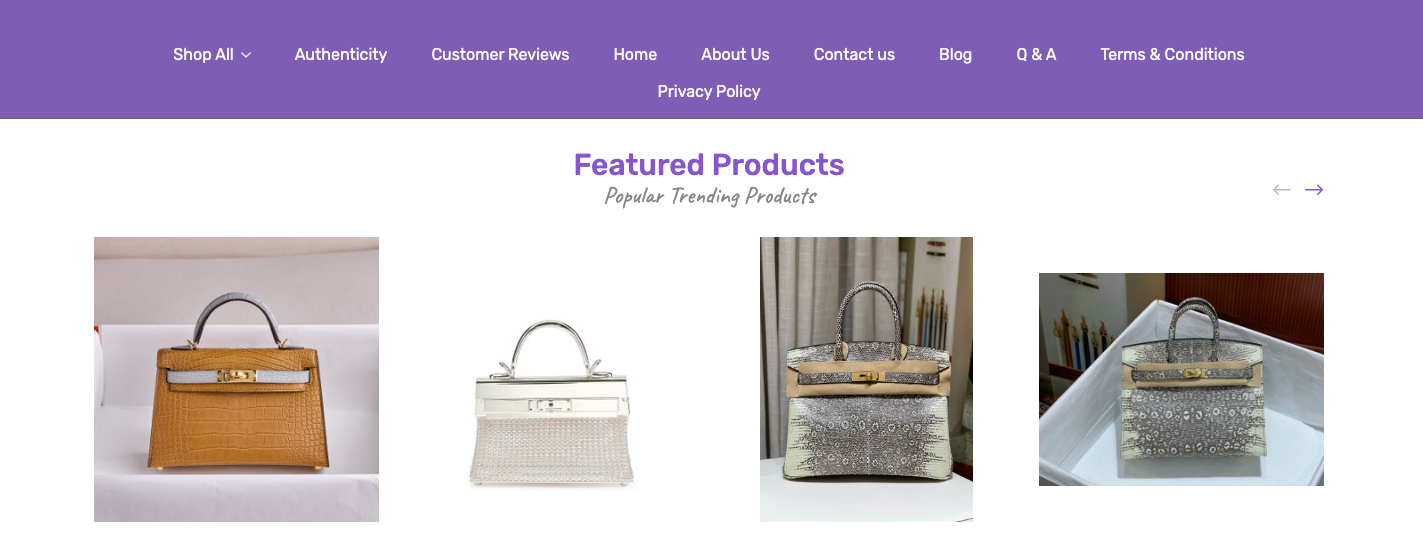
Explore our comprehensive luxury bag authentication guide to refine your skills further. Browse our curated selection of top-rated luxury handbags for 2026, each verified for authenticity before listing. Our designer handbag buying guide helps collectors make informed investment decisions. Build your collection confidently with expert support and guaranteed authentic pieces.
Frequently asked questions
What tool is most important for examining Hermès stitching?
A magnifying glass or jeweler’s loupe with at least 10x magnification proves essential for detailed stitching inspection. This tool reveals spacing precision, thread quality, and needle hole alignment invisible to naked eyes.
Can UV light reveal counterfeit leathers?
UV light exposes hidden authentication marks and highlights material treatment inconsistencies typical of counterfeit leathers. Genuine Hermès leather displays characteristic fluorescence patterns under UV examination that synthetic materials cannot replicate accurately.
How often do Hermès blind stamps change?
Hermès updates blind stamp symbols annually, with each year receiving a unique identifying mark. The coding system also includes artisan marks that remain consistent for individual craftspeople throughout their careers at Hermès.
Is professional authentication necessary for all buyers?
Professional authentication ensures near 99.5% accuracy, making it ideal for rare pieces or purchases exceeding $10,000. DIY methods achieve 85% accuracy and suit budget-conscious collectors purchasing more common models with complete documentation.
What documentation most increases authentication confidence?
Original sales receipts from authorized Hermès boutiques provide strongest provenance proof. Warranty cards with matching serial numbers and branded care booklets further verify legitimate retail purchase and careful ownership history.